De Azoren is een eilandengroep in de Atlantische Oceaan, circa 1448 km westelijk van het vasteland van Portugal.
Administratief zijn de eilanden een autonome regio van Portugal.
Er wonen 245.000 mensen en de eilanden hebben een oppervlakte van 2247 km2.
De eilanden van de Azoren
De negen eilanden zijn Sao Miguel (het grootste) en Santa Maria in het zuidwesten; Terceira, Pico, Faial, Sao Jorge en Graciosa in het midden;
en Flores en Corvo in het noordwesten. Ponta Delgada is de hoofdstad en tevens de grootste stad.
Middelen van bestaan
De vruchtbare grond levert vele gewassen op en zorgt voor bloeiende wijngaarden. Men voert suikerbieten, sinaasappels, bananen en ananas uit.
Het toerisme neemt de laatste jaren toe en steeds meer mensen vinden een bestaan in deze sector.
Vulkanisme
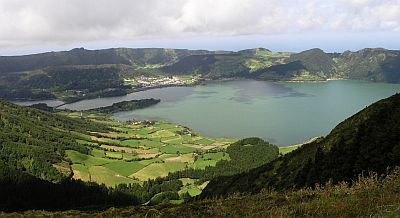
Ook vanwege de vulkanische activiteiten worden de eilanden vaak bezocht. Men komt er veel kratermeren, watervallen en enkele vulkanen tegen.
Pico Alto is de hoogste vulkaan (2351 meter). Dit is meteen de hoogste berg van Portugal.
Geschiedenis
De Azoren waren al bekend bij de Grieken en Romeinen en kwamen voor het eerst op landkaarten voor in 1351. Portugese zeelieden stapten in
1427 of 1431 aan land, maar kolonisatie begon pas in 1445 met Diogo de Sevilha of Goncalo Velho Cabral. Gedurende deze periode waren de
Azoren een tussenstop voor de vloten van ontdekkingsreizigers als ze terugkeerden van de Nieuwe Wereld.
Er gingen in dit gebied vele schepen ten onder tijdens wervelstormen of vielen ten prooi aan piraten die hier opereerden.
De eilanden waren ook in trek bij bannelingen.
In de onmiddellijke omgeving vonden zeeslagen plaats tussen de Engelsen en de Spanjaarden.
In de 20e eeuw vond de grote uittocht naar de Verenigde Staten plaats.
De Verenigde Staten onderhouden nog steeds een NAVO-basis op de eilanden.
Activiteiten
De eilanden kenmerken zich door een weelderige en indrukwekkende natuur. De bloemenpracht is gigantisch, met name in het
voorjaar.
Doordat het toerisme geen uitwassen kent kan men er nog echte rust vinden. Wandelen kan men
op deze eilanden maar ook genieten van de authentieke dorpjes met prachtige kerken en landhuizen. Verder kan men op de
Azoren walvis-spotten en watersporten beoefenen. Stranden vindt men in heel beperkte mate.
De mooiste stranden zijn op het eiland Santa Maria.
Het klimaat is vrij constant. De temperatuur ligt gemiddeld tussen 14 en 25 graden. In augustus is het het warmst.

 Copyright foto: Francisco Botelho